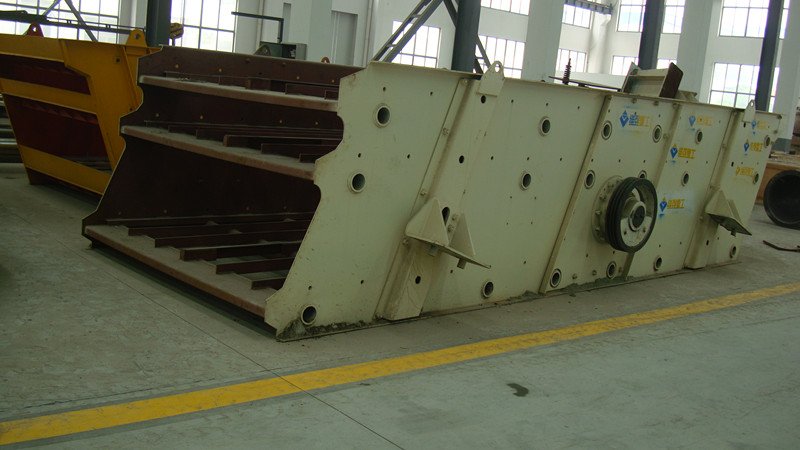
What are vibrating screens used for?
A vibrating screen separates particles by size using one or more screen decks. In mining it commonly grades crusher discharge, removes oversize or controls material sent to another process stage.
How it works
Vibration helps particles stratify and encounter openings in the screen media. Screening efficiency depends on aperture, open area, feed distribution, near-size material, moisture and bed depth. The deck area alone does not determine the result.
When to consider it
Consider a vibrating screen when the process requires a defined size split. Supply a full sieve analysis and the acceptable misplaced material in each stream, including any circulating load from a crusher.
Application limits to check
Sticky clay and wet fines can blind openings. A sizing screen and a dewatering screen have different primary duties; selecting only by deck dimensions can overlook media and motion requirements.
Selection data for a useful quotation
These are enquiry inputs, not specifications of a single model. Include measured values, units and the expected operating range; flag anything still to be tested.
| Input | What to provide |
|---|---|
| Feed analysis | Full size distribution, near-size fraction and maximum lump |
| Material condition | Bulk density, moisture, clay and abrasion |
| Separation target | Apertures, number of products and efficiency definition |
| Loading | Fresh feed, recirculation, bed depth and feed width |
| Media | Wire, rubber or polyurethane, open area and fastening |
| Installation | Supports, dynamic loads, chutes, clearance and dust enclosure |
Compare the complete duty
Compare circular, linear and other screen arrangements against the actual duty. Hydrocyclones classify slurry by different separation behavior and are not direct substitutes for a specified dry sieve cut.
Before accepting a supplier proposal
- Agree a mass-balance and sieve-sampling acceptance method.
- Review dynamic foundation loads, isolators and media-change clearance.
- Confirm feed distribution and access to every deck and discharge chute.
Buyer questions about vibrating screens
Why does near-size material matter?
Particles close to the opening size are harder to separate than clearly smaller or larger particles. Their proportion affects the area and operating conditions needed.
Can more decks increase output?
More decks add size splits, but they also change loading and available area. Check each deck's duty rather than assuming more decks mean more capacity.
Which screen media lasts longest?
Wear life depends on abrasion, aperture, impact and operating conditions. Compare life together with open area, product quality and replacement effort.
Technical reference
Xinhai: official equipment and technology description ↗
The source provides technology context. The selection checklist is KMS Industrial editorial guidance; manufacturer models and performance figures are not KMS specifications.