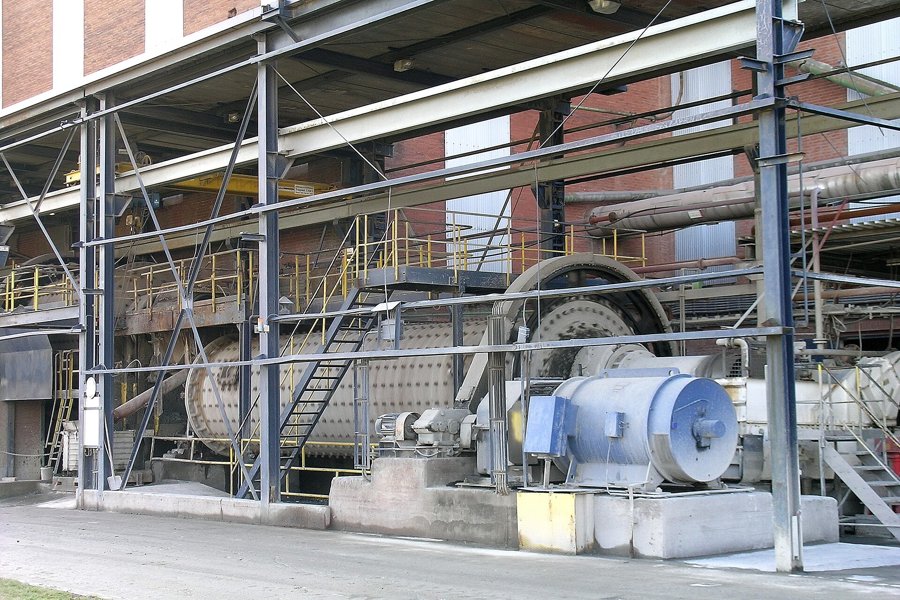
What are ball mills used for?
A ball mill uses a rotating shell and grinding media to reduce ore size. In wet mineral processing it is commonly paired with classification to deliver a controlled feed to downstream separation.
How it works
The rotating mill lifts balls and ore, allowing impact and abrasion to break particles. Feed size, ore grindability, media loading, discharge design and the classification circuit affect the result. Installed motor power alone cannot establish the required grind.
When to consider it
Consider a ball mill when testwork defines the liberation or product-size target and the plant needs a suitable grinding stage. Include fresh-feed duty and the circulating load for a closed circuit.
Application limits to check
A mill selected without representative grindability data can miss production or size targets. Overgrinding may create unnecessary fines and affect downstream separation; finer is not automatically better.
Selection data for a useful quotation
These are enquiry inputs, not specifications of a single model. Include measured values, units and the expected operating range; flag anything still to be tested.
| Input | What to provide |
|---|---|
| Ore testwork | Grindability, hardness variability and abrasion information |
| Feed and product | Feed F80, target product P80 and full size distributions |
| Production | Dry solids rate, operating hours and circulating load |
| Slurry | Density, water chemistry, viscosity and temperature |
| Mill configuration | Overflow or grate discharge, liners, media and drive |
| Infrastructure | Power supply, foundation loads, lubrication and maintenance space |
Compare the complete duty
A ball mill typically supports finer grinding than a rod-mill duty. SAG and HPGR arrangements may change the upstream circuit. Compare complete flow sheets and energy estimates using the same ore test basis.
Before accepting a supplier proposal
- Request a documented sizing basis and the ore samples used.
- Check liner and media scope, alignment, lubrication and drive protection.
- Define acceptance using throughput and product-size sampling at agreed circuit points.
Buyer questions about ball mills
What is the difference between overflow and grate discharge?
Their discharge arrangements differ and influence slurry transport and duty. Choose from the process requirements and supplier design rather than treating them as interchangeable.
Can capacity be selected from shell diameter?
No. Diameter is only one input; length, power, ore characteristics, feed size, target grind and circuit conditions also matter.
Why provide both F80 and P80?
They describe feed and product size at 80 percent passing. Together with grindability and throughput, they help define the reduction duty.
Technical reference
Xinhai: official equipment and technology description ↗
The source provides technology context. The selection checklist is KMS Industrial editorial guidance; manufacturer models and performance figures are not KMS specifications.