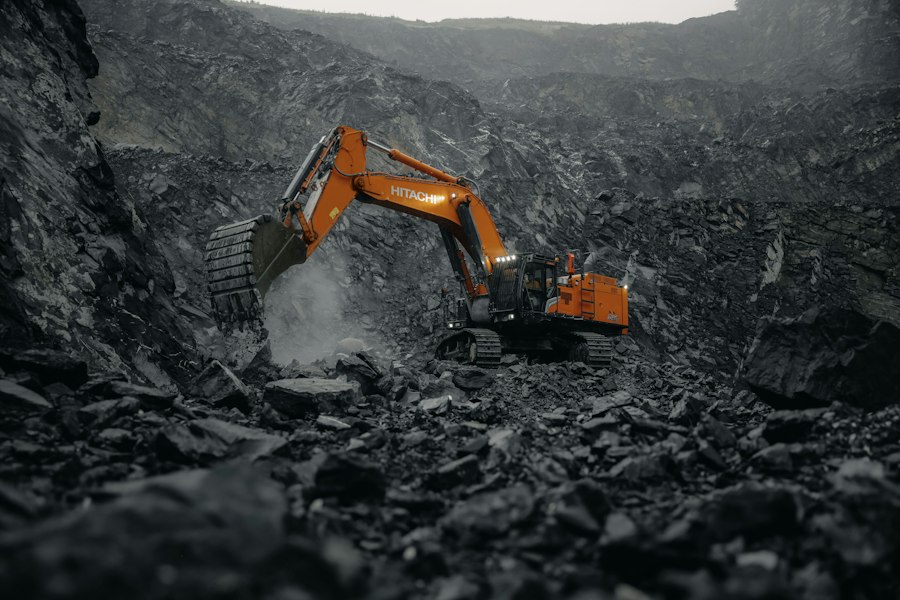
What are wheel loaders used for?
A wheel loader uses a front-mounted bucket to load, carry and discharge material. Mining and quarry duties include stockpile handling, crusher feeding and truck loading where travel and ground conditions suit the machine.
How it works
Traction, hydraulic lifting and articulation combine to move and place the load. Effective payload depends on bucket configuration, material density and stability limits. Travel distance and pile condition influence cycle productivity.
When to consider it
Consider a wheel loader for flexible stockyard and short loading cycles. Provide the material, receiving hopper or truck geometry and the actual work route so suppliers can review reach, dump clearance and tire selection.
Application limits to check
Rated bucket volume does not establish safe payload for every material. Uneven ground, gradients, long travel and poor traction can constrain use. Choose the attachment and operating envelope for the actual duty.
Selection data for a useful quotation
These are enquiry inputs, not specifications of a single model. Include measured values, units and the expected operating range; flag anything still to be tested.
| Input | What to provide |
|---|---|
| Material | Loose density, particle size, abrasion and pile condition |
| Cycle | Loading point, travel distance, gradients and discharge point |
| Attachment | Bucket type, volume, wear protection and coupler scope |
| Geometry | Dump clearance, reach, turning space and receiving height |
| Ground and tires | Surface, traction, tire duty and ambient conditions |
| Ownership scope | Power supply or fuel, maintenance, service and spares |
Compare the complete duty
A wheel loader offers travel flexibility; an excavator offers a different digging and reach envelope. Compare the real cycle and ground conditions. Underground LHD equipment is a separate low-profile machine category.
Before accepting a supplier proposal
- Confirm the selected attachment's payload and stability basis.
- Review dump clearance and reach using the actual truck or hopper dimensions.
- Include tires, ground-engaging tools, service access and operator orientation.
Buyer questions about wheel loaders
Can the same bucket load rock and light material?
Different densities and abrasion duties may call for different buckets. Confirm capacity, payload and wear protection for each intended material.
What determines tire selection?
Load, speed, travel length, surface, heat and cut exposure all matter. Request a duty-specific tire recommendation.
Can a surface loader replace an underground LHD?
Do not assume interchangeability. Underground clearances, ventilation, fire protection and destination requirements can require purpose-designed equipment.
Technical reference
XCMG: official equipment and technology description ↗
The source provides technology context. The selection checklist is KMS Industrial editorial guidance; manufacturer models and performance figures are not KMS specifications.