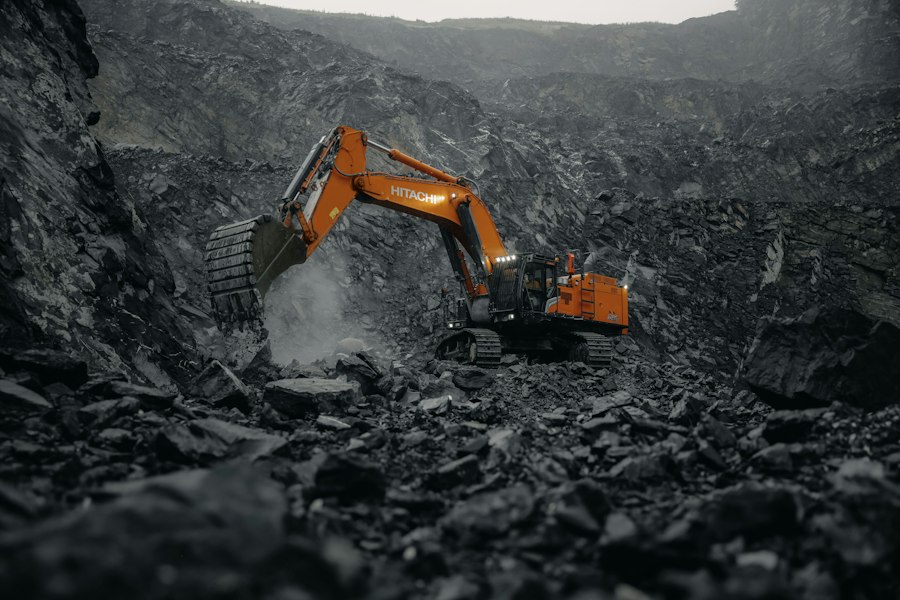
What are mining excavators used for?
A mining excavator loads and moves material using a hydraulically operated digging attachment. Selection should match the material, digging conditions, loading arrangement and haul fleet rather than operating weight alone.
How it works
The hydraulic system powers boom, stick, bucket and swing movements. Bucket fill, material density, cycle conditions and the dump height influence effective loading. Backhoe and face-shovel arrangements suit different working geometries.
When to consider it
Consider a mining excavator when the mine plan defines the bench, material condition and truck fleet. State whether it will load blasted rock, loose overburden or another material so the bucket and protection package can be assessed.
Application limits to check
A nominal bucket volume is not a fixed payload. Ground support, face stability, visibility and haul-truck positioning require site engineering and operating procedures. Fleet productivity cannot be guaranteed from a machine size label.
Selection data for a useful quotation
These are enquiry inputs, not specifications of a single model. Include measured values, units and the expected operating range; flag anything still to be tested.
| Input | What to provide |
|---|---|
| Material | Loose density, fragmentation, abrasion and digging resistance |
| Loading duty | Required production, truck payload and working arrangement |
| Attachment | Bucket type, capacity, wear package and reach envelope |
| Site geometry | Bench, dump height, clearances and ground conditions |
| Power and environment | Diesel or electric scope, altitude and temperature |
| Support | Service access, consumables, critical spares and training |
Compare the complete duty
Compare excavators and wheel loaders for digging geometry, travel needs, ground conditions and truck matching. Compare backhoe and face-shovel arrangements with the intended bench and loading method.
Before accepting a supplier proposal
- Review bucket payload against actual loose density and permissible machine limits.
- Confirm visibility, protective structures, access and applicable destination requirements.
- Agree warranty scope, commissioning, service response and a critical-spares list.
Buyer questions about mining excavators
How is bucket size matched to a truck?
Use actual material density, expected fill and the loading plan to estimate passes, then check both machines' limits. Volume alone is insufficient.
Does a larger excavator always improve production?
No. Truck availability, fragmentation, positioning and ground conditions can become the bottleneck.
Which wear parts should be quoted?
Include the bucket protection, ground-engaging tools and other duty-specific consumables, with material and replacement references.
Technical reference
XCMG: official equipment and technology description ↗
The source provides technology context. The selection checklist is KMS Industrial editorial guidance; manufacturer models and performance figures are not KMS specifications.