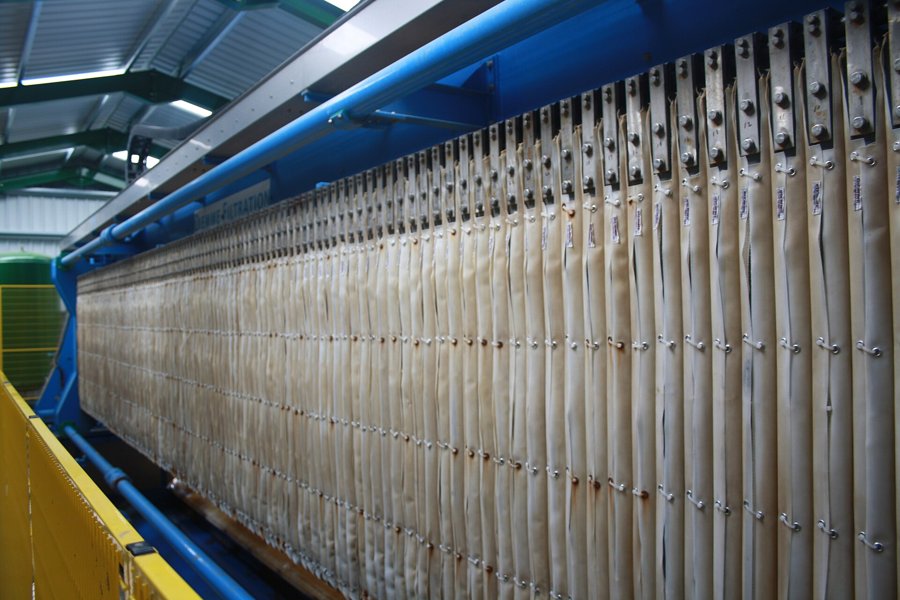
What are filter presses used for?
A filter press separates solids from slurry by pressure filtration through a filter medium. It commonly operates in batches to produce a cake and a filtrate stream for suitable concentrate or tailings duties.
How it works
Slurry is pumped into chambers formed between filter plates. Liquid passes through cloth while solids accumulate as cake. Filling, filtration, optional membrane squeezing or washing, and cake discharge form a cycle whose duration affects capacity.
When to consider it
Consider a filter press when the handling or product specification requires a defined cake condition. Test representative slurry and include cake discharge, filtrate treatment and the upstream buffer volume in the selection.
Application limits to check
Cake moisture and cycle time depend on the feed and configuration. A high pressure rating alone does not establish performance. Compressible fines, cloth blinding and variable feed can materially affect output.
Selection data for a useful quotation
These are enquiry inputs, not specifications of a single model. Include measured values, units and the expected operating range; flag anything still to be tested.
| Input | What to provide |
|---|---|
| Slurry sample | Mineralogy, particle sizes, solids concentration and chemistry |
| Filtration test | Cake resistance, compressibility, cycle time and moisture |
| Output | Dry solids per hour, cake handling and filtrate quality |
| Plate arrangement | Chamber or membrane, filtration area and cake volume |
| Services | Feed pump, air, wash water and hydraulic system |
| Automation | Plate shifting, cloth washing, guarding and discharge access |
Compare the complete duty
A filter press usually uses a batch pressure cycle; a vacuum belt filter offers continuous filtration with different pressure and washing characteristics. Compare demonstrated cake properties and total operating requirements.
Before accepting a supplier proposal
- Request a representative filtration test and a complete cycle breakdown.
- Verify pressure protection, plate condition, cloth compatibility and guarding.
- Include feed pumping, cake discharge, washing and critical spares in the quotation.
Buyer questions about filter presses
Is membrane squeezing included in every press?
No. Chamber and membrane arrangements differ. Confirm the proposed plates, pressure systems and cycle in the supply scope.
Can cake moisture be guaranteed from a catalogue?
A reliable target needs representative feed testing and agreed operating conditions. Different ores can behave very differently.
Why include discharge time in capacity?
Batch output depends on the whole cycle, including opening, cake release and closing, rather than filtration time alone.
Technical reference
Jingjin Equipment: official equipment and technology description ↗
The source provides technology context. The selection checklist is KMS Industrial editorial guidance; manufacturer models and performance figures are not KMS specifications.